
No products in the cart.
Latex vs Pocket Spring Mattress: Pros and Cons You Must Know
When you’re mattress shopping in Malaysia, the choice between a latex vs pocket spring mattress can feel overwhelming. Both options promise comfort and support, but their materials, performance, and price tags differ in important ways. This guide walks you through the pros and cons of each so you can pick the best mattress for your sleep style, budget, and health needs.
Latex mattress benefits
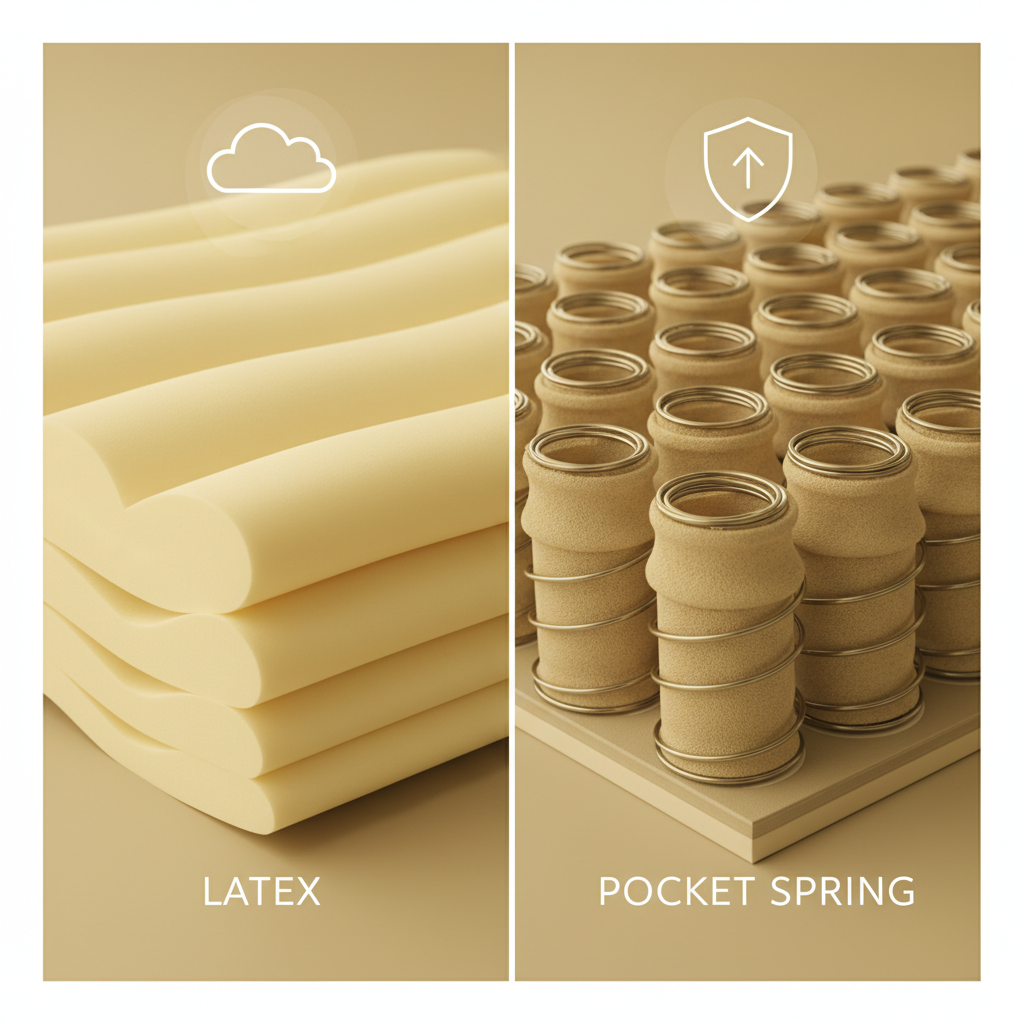
Natural latex mattresses start with sap from rubber trees, which gets processed into resilient foam. The result is a sleeping surface that conforms to your curves while pushing back enough to keep your spine aligned. Since latex foams breathe, heat and humidity slip through the material instead of trapping moisture against your body. For Malaysia’s tropical nights, that extra airflow can mean the difference between tossing and turning and deep, restorative sleep.
Latex also resists dust mites, mold, and bacteria without chemical treatments. You won’t wake up sneezing or coughing if allergies or asthma keep you up at night. Many people find that a latex mattress feels both supportive and buoyant—enough give to relieve pressure points around hips and shoulders, but enough firmness to prevent sagging over years of use.
Pocket spring mattress benefits
A pocket spring mattress uses hundreds or even thousands of individual coil springs, each wrapped in its own fabric pocket. Because each spring moves independently, your weight gets distributed precisely according to your body shape. You’ll notice better zoned support—firmer under your hips, softer under your shoulders—and strong edge support so you can use the full mattress surface without feeling like you’ll roll off.
Springs allow air to circulate freely, helping to wick away heat and moisture throughout the night. A pocket spring mattress usually costs less upfront than a pure latex model, and it’s lighter to carry when you rearrange your bedroom. If you like a bit of bounce or you share the bed with a restless partner, this design minimizes motion transfer so you’re less likely to be disturbed whenever they shift.
Compare support and durability
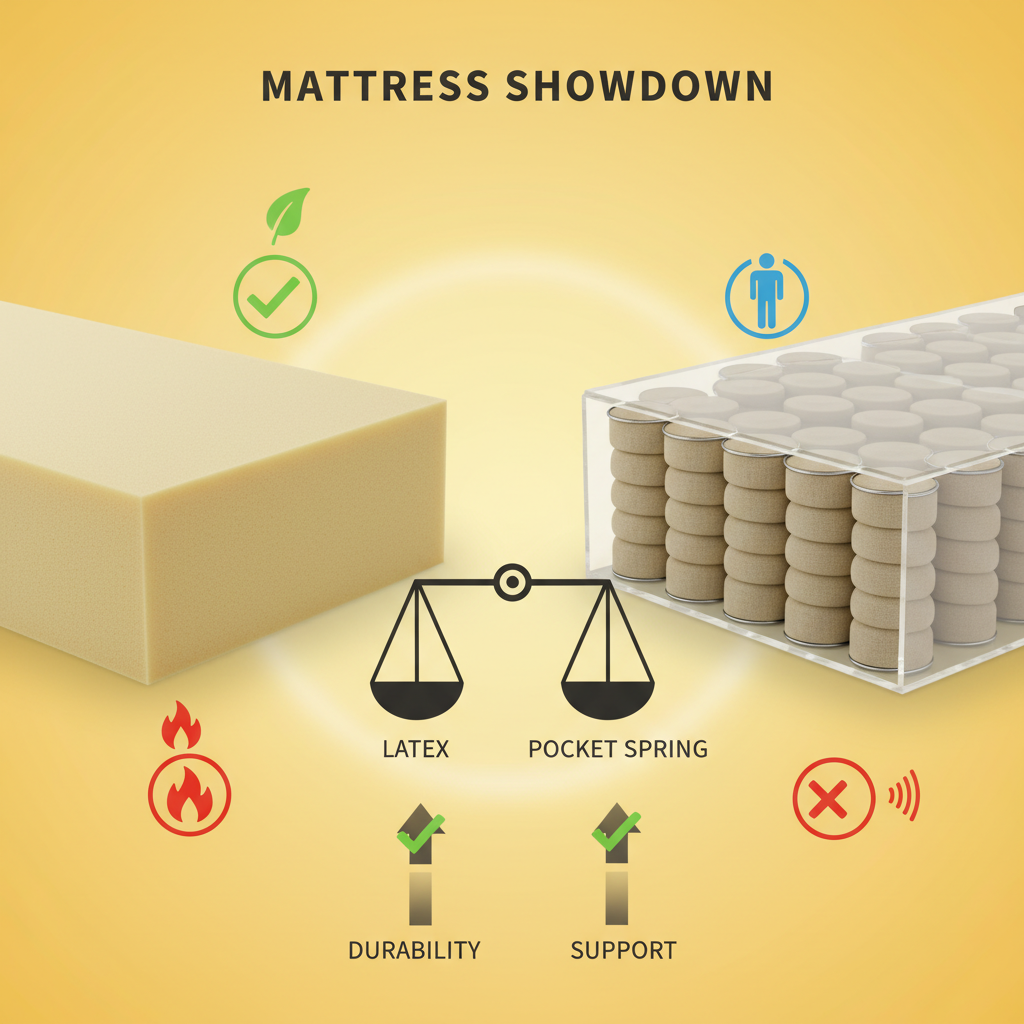
When evaluating comfort and lifespan, you’ll want to see how each mattress holds up over time. The following table highlights key performance areas at a glance:
| Feature | Latex mattress | Pocket spring mattress |
|---|---|---|
| Support and alignment | Conforming yet resilient | Zoned support with firmer and softer zones |
| Motion isolation | Excellent—foam dampens movement | Very good—individual coils reduce bounce |
| Heat dissipation | Breathable channels for airflow | Air flows freely between coils |
| Hypoallergenic | Naturally resistant to mites and mold | May need chemical treatments or covers |
| Lifespan | 10–20 years | 7–10 years |
| Noise | Silent | Possible creaks as springs age |
| Price range | Mid to high | Budget to mid |
Support and alignment
Latex excels at distributing pressure evenly—you feel cradled but not stuck. Over the years, high-quality latex retains its shape, so you won’t notice deep body impressions. Pocket spring mattresses deliver firmer pushback where you need it, which can help maintain neutral spinal curves for back and side sleepers.
Durability and lifespan
Natural latex typically outlasts most spring systems. Expect a decade or more before noticeable sagging appears. Pocket springs can lose tension over time, especially if the steel gauge is lighter. However, well-constructed models with robust coils and quality foams can still give you seven to ten years of consistent comfort.
Allergy and health factors
Your mattress can either aggravate or soothe respiratory sensitivities. Understanding how each material interacts with allergens and chemicals is crucial, especially if you suffer from asthma or eczema.
Allergen resistance
Dense latex foam is thick enough to prevent dust mites from settling deep inside it, reducing allergen buildup. Unlike mattresses with quilted pillow tops made of cotton or porous polyurethane foam, latex stays inhospitable to mites without needing harsh chemicals. If allergies are a concern, you’ll appreciate knowing that natural latex mattresses rank among the best for respiratory health.
VOC emissions
Memory foam and synthetic foams can off-gas volatile organic compounds (VOCs) that irritate airways. Pure natural latex has minimal VOC emissions because it relies on tree sap rather than petroleum-based polymers. Pocket spring mattresses often include foam layers that may emit VOCs unless they’re certified low-emission. To be safe, look for products labeled OEKO-TEX or CertiPUR-US certified.
Price and budget considerations
Latex mattresses tend to occupy the higher end of your spending range, with natural Talalay or Dunlop latex models starting around RM2,000 and easily climbing above RM6,000 for premium layers and covers. You’re paying for durability, eco-friendliness, and exceptional pressure relief.
Pocket spring mattresses can suit more modest budgets. Entry-level models begin near RM1,000, and mid-range versions with enhanced comfort layers run RM2,000 to RM4,000. Keep in mind that a lower price might mean thinner foams or lighter gauge coils that wear out sooner.
Calculate cost per year of use when comparing options. A more expensive latex mattress with a 15-year lifespan may actually save you money over two budget-level spring mattresses that need replacing every seven years.
Choosing the right mattress
When you decide between latex vs pocket spring mattress, weigh your personal priorities. If you value eco-friendly materials, hypoallergenic properties, and long-term resilience, latex is your best bet. If you want a lively feel, strong edge support, and an entry-level price, pocket spring could be the smarter choice.
Try mattresses in person whenever possible. Spend at least ten minutes lying in your usual sleep positions. Look for a generous trial period and warranty so you can test that new comfort at home without risk. With the right mattress under you, a cooler, more restful night’s sleep in Malaysia is within reach.

Leave a Comment: