
No products in the cart.
Latex Mattress Comfort Review: What You Must Know Today
Latex mattress comfort
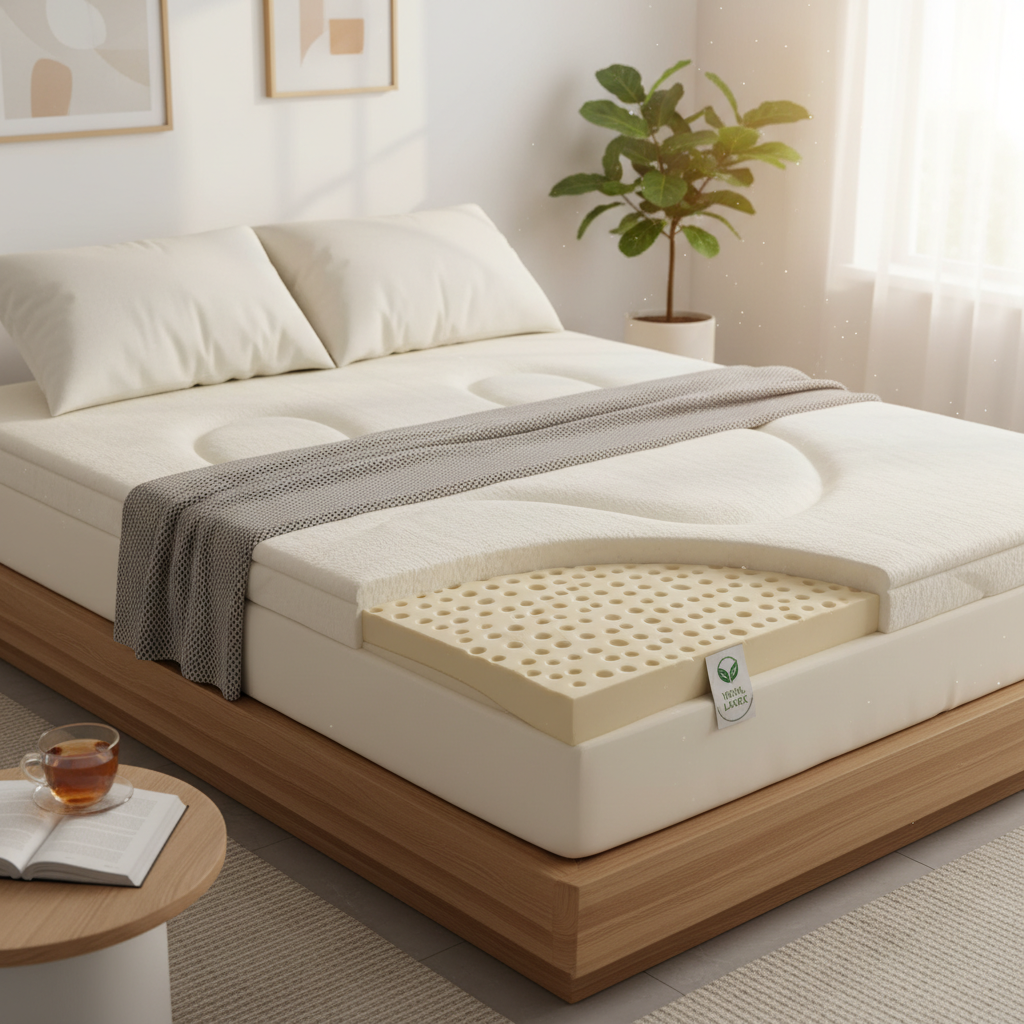
If you’re hunting for a latex mattress comfort review that covers sink-in support, cooling, and long-lasting performance, you’ve come to the right place. Latex mattresses combine natural resilience with contouring pressure relief, making them a top pick for sleepers who value both comfort and spine alignment. In this section, we’ll unpack the feel, airflow, and durability that set latex apart from other mattress types.
Gentle sink and bounce
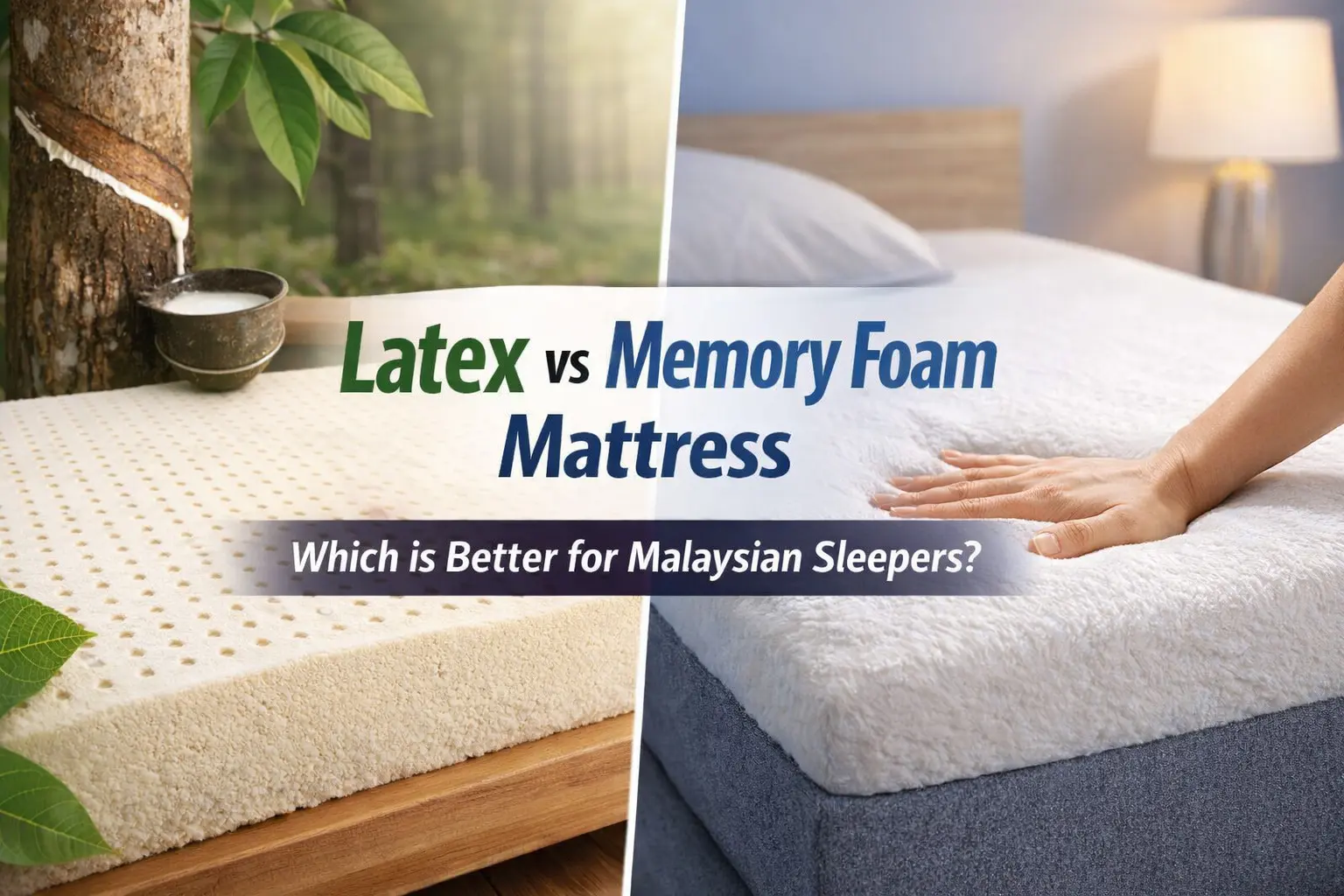
When you lie down on a latex mattress, you’ll notice a gentle sink rather than a deep engulfing hug. The natural springiness of latex means you never feel trapped, unlike some memory foam models that contour so closely they can inhibit easy movement. This responsive pushback helps you change positions without effort while still cradling your hips and shoulders. According to a 2026 review by SleePare, that perfect balance of sink and bounce is what many sleepers love most in a latex setup.
Pressure relief and alignment
Latex excels at distributing weight evenly across the surface, which reduces pressure points in sensitive areas like hips and shoulders. By allowing heavier body parts to sink just enough, your spine stays aligned on a neutral plane, helping prevent aches and stiffness over time. Improved circulation is another benefit, as you aren’t compressing blood vessels as you might on a very firm mattress. The combination of support and gentle conforming often translates into fewer tosses and turns at night.
Airflow for hot sleepers
If overheating is a concern, latex has you covered with its inherent open-cell structure and pinhole design. These tiny manufacturing perforations let air circulate freely through the mattress, pulling heat away from your body and dissipating moisture. Many hot sleepers report staying cooler on latex compared to dense memory foam that traps warmth against the skin. That natural breathability makes a latex mattress a smart pick if you live in warm climates or run hot under even light covers.
Durability and longevity
One of the standout features of latex is its remarkable lifespan. High-quality latex mattresses retain their shape and support for a decade or more without developing sagging indentations. Unlike foam layers that can break down under constant pressure, latex’s resilient cell structure bounces back night after night. That long-term durability often makes latex a more cost-effective choice over time despite a higher upfront price.
Latex types and pricing
Natural latex comes in two primary processing methods: Dunlop and Talalay. Dunlop latex is denser and firmer, providing a stable, supportive feel that many back sleepers appreciate. Talalay latex goes through an extra vacuum step during production, resulting in a lighter, airier foam that emphasizes softness and breathability. Both varieties deliver excellent comfort, but Talalay tends to be pricier due to its more involved manufacturing process.
Prices for latex mattresses can range widely based on purity and origin. All-natural latex beds typically cost between $1,000 and $4,000, reflecting higher materials and labor expenses. Blended or synthetic latex options are more budget-friendly, often falling in the $700 to $1,500 range. While a blended mattress may not match the eco-friendly credentials of natural latex, it still offers many of the same pressure-relief and cooling benefits.
Pocket spring benefits
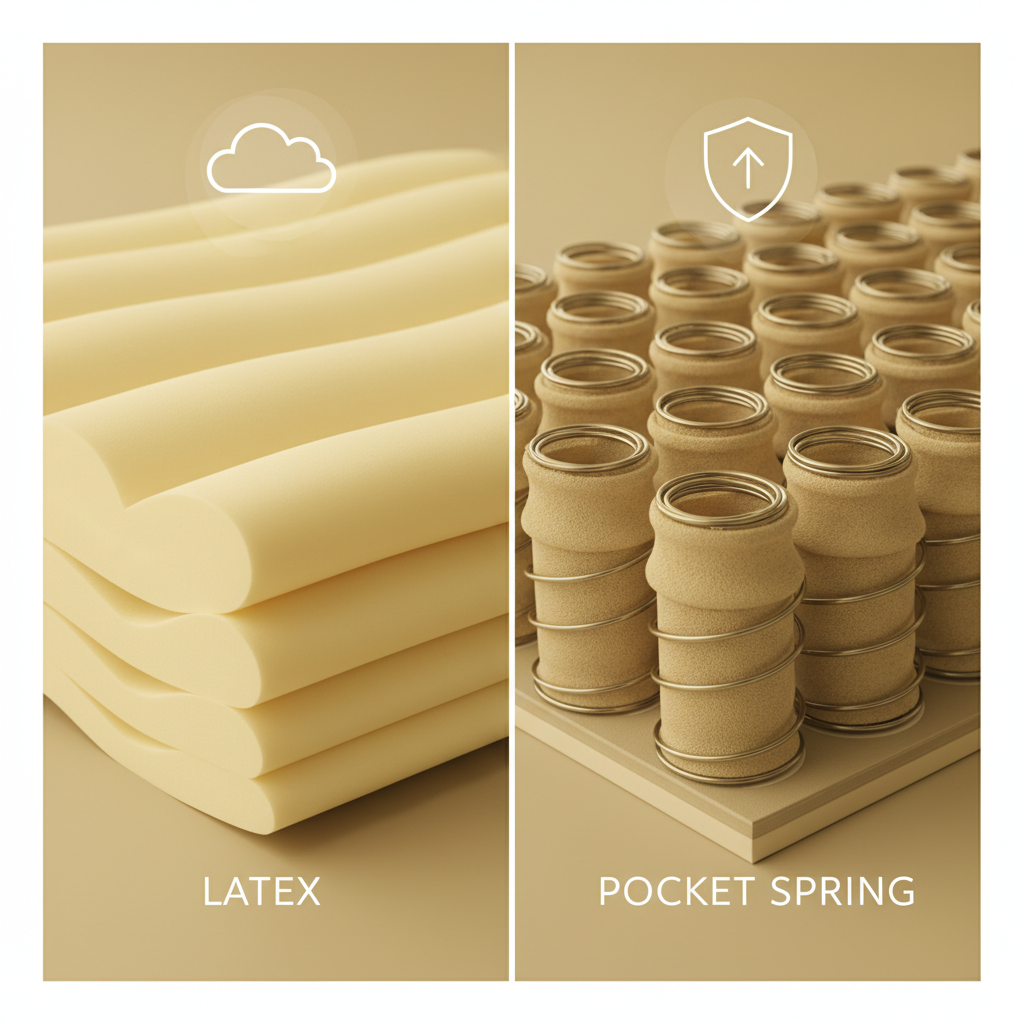
A pocket spring mattress uses thousands of individually wrapped coils, each responding independently to your body’s contours. That design allows very precise support, as springs compress under heavier points while remaining firmer where you weigh less. Because the coils aren’t tied together like traditional innersprings, motion transfer is minimized—your partner can move without disturbing your side of the bed. Let’s explore the key advantages of pocket springs next.
Targeted support and bounce
Individually encased coils adapt to your curves much like latex, but they deliver a slightly more pronounced springy feel. If you enjoy a lively bounce and quick rebound when you sit or stand, pocket springs deliver that perk easily. That buoyancy also helps edge support, so you can use the full surface of your mattress without feeling like you might roll off. Many luxury hybrids combine pocket springs with a top latex or foam layer to blend responsive bounce with soft cushioning.
Enhanced airflow
Pocket spring mattresses tend to sleep cool because air moves freely between the coils. Unlike solid foam cores, these voids provide natural ventilation channels that whisk away heat. Some designs even integrate a breathable cover or gel-infused foam around the coils for an extra cooling kick. If you’re worried about night sweats, the combination of springs and strategic airflow can be a big win.
Motion isolation and edge support
Wrapped coils excel at isolating motion because each spring works on its own, limiting ripples across the bed when your partner shifts. That containment often rivals latex’s motion control, making pocket springs a solid choice for couples. Moreover, many pocket spring designs reinforce the perimeter with sturdier coils so you get reliable edge support whether you’re sitting on the side or lying near the boundary.
Durability and maintenance
Quality pocket spring mattresses can last seven to ten years before you notice significant breakdown. Coil springs can rust or compress over time if moisture builds up, so it’s wise to use a breathable base and rotate the mattress periodically. With proper care—like flipping, rotating, and keeping humidity in check—a pocket spring mattress will continue to perform well and hold its shape for many years.
Comfort comparison table
| Feature | Latex mattress | Pocket spring mattress |
|---|---|---|
| Support | Gentle contouring with buoyant pushback | Precise contouring with lively rebound |
| Contouring | Medium conforming, suits most sleepers | Adaptable support, slightly springier feel |
| Bounce | Moderate bounce for easy repositioning | High bounce, very responsive |
| Cooling | Open-cell structure, pinholes improve airflow | Coil ventilation, natural breathability |
| Motion isolation | Excellent, reduces partner disturbance | Very good, independent coils minimize transfer |
| Durability | 10+ years before sagging | 7–10 years with proper rotation |
| Price range | $700–$4,000 (depending on type) | $500–$2,500 (depending on build) |
Select your mattress
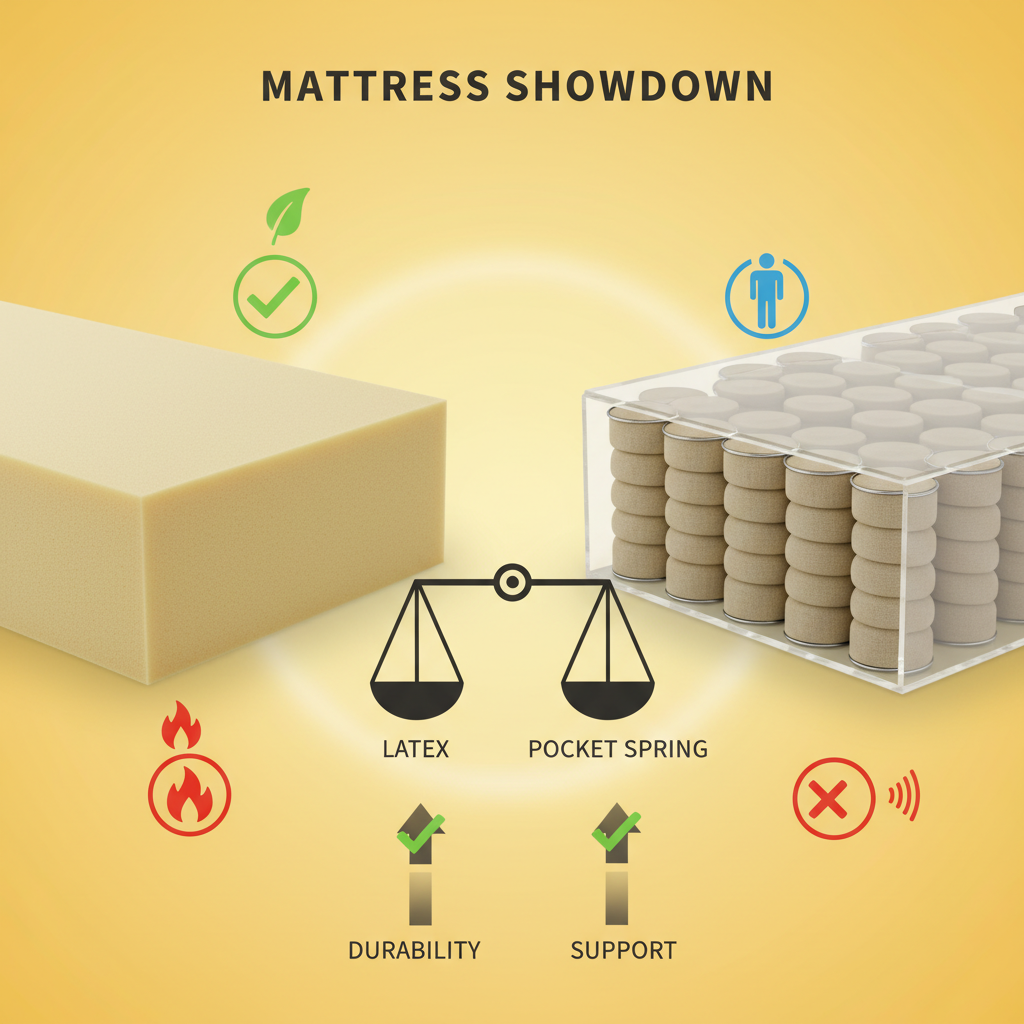
Choosing between a latex mattress and a pocket spring option ultimately comes down to your sleep priorities. If you value a balanced hug that still lets you move freely, natural latex is hard to beat. On the other hand, if you crave a bouncier feel combined with sturdy edge support, pocket springs might be the right match. Consider your usual sleeping position: side sleepers often appreciate latex’s pressure relief, while back and stomach sleepers may prefer the firmer push of coils.
Budget and maintenance play a role as well. Although latex can cost more up front, its decade-long lifespan may translate into better value over time. Pocket spring beds cover a broad price spectrum and can be easier to find on sale or at discount retailers. Keep in mind that humidity and moisture exposure affect springs more than latex, so factor in a breathable mattress protector and a well-ventilated base.
Finally, always take advantage of in-home trial periods. Sleeping on a mattress for at least 30 nights gives you real feedback on comfort, support, and temperature regulation. Make sure your purchase includes a generous return policy—nothing replaces the personal feel test when it comes to your best night’s sleep.
Your ideal mattress is out there, and armed with this latex mattress comfort review, you’re ready to find it and transform the way you rest.
Leave a Comment: